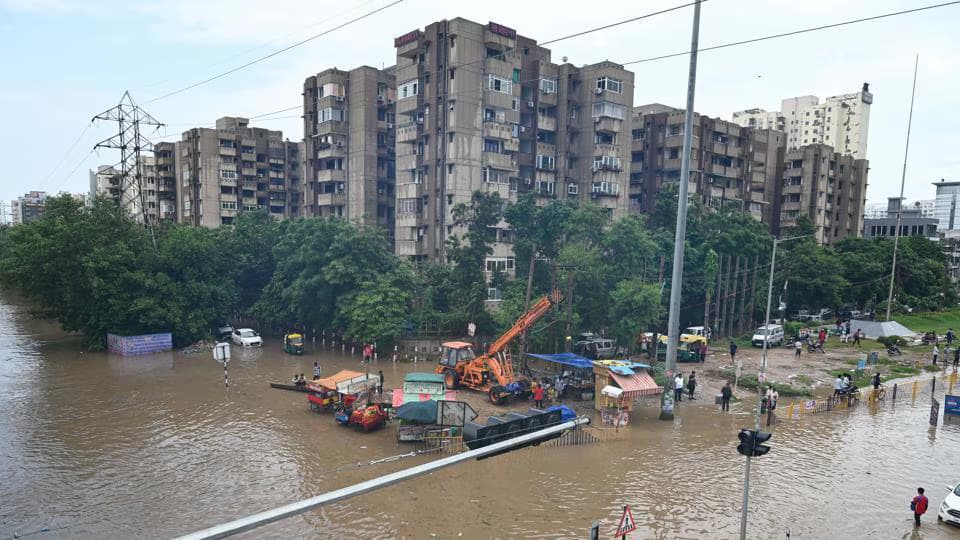
Heavy rainfall is often blamed when roads become flooded. However, rain alone is not always the complete reason behind urban waterlogging.
Cities naturally need systems that can collect, transport, temporarily store and discharge large volumes of stormwater.
As urban development increases, this becomes more challenging.
Over time, open land is replaced with:
Roads
Buildings
Parking areas
Commercial complexes
Residential developments
Concrete surfaces
Natural soil absorbs a portion of rainfall. But concrete and paved surfaces do not allow water to infiltrate easily.
Instead, rainwater quickly flows across the surface and enters drains.
When a large amount of water reaches the drainage system within a short period, bottlenecks can occur.
This can result in:
Flooded roads
Waterlogged underpasses
Traffic congestion
Damage to infrastructure
Disruption to businesses
Difficulties for emergency services
Safety risks for residents
Recent reporting on Gurugram has again highlighted widespread disruption following intense rainfall, while drainage bottlenecks, clogged channels and urban development continue to be discussed as major contributors to the city's recurring problem.
The challenge, therefore, is not simply about receiving rain.
The bigger challenge is managing where that rainwater goes.